The Day Two Problem:
Why We Need to Stop Retiring and Start Graduating
Escape The Clock Insights
In the world of Program Management, there is a classic dilemma known as the “Day Two Problem.”
We spend months, if not years, executing toward a massive milestone. We track the KPIs, burn down the risk logs, and sprint toward the finish line. Eventually, we hit the big day. The launch happens. Champagne is popped. But often, the program fails immediately after because no one accounted for the next morning.

When Day Two arrives, the project team has disbanded, but the operations still need to run. If a plan wasn’t put in place for that transition, the whole system falls apart.
I see this exact same failure mode in retirement planning.
Everyone knows how to sprint toward the finish line. The phase where you are working, saving, and investing is called the Accumulation Phase. It is a clear project with a clear deadline. But rarely do we plan for the Decumulation Phase—the actual operation of the life we just bought.
The consequences of failing to plan for “Day Two” are real. According to the Institute of Economic Affairs (2023), nearly one-third of retirees suffer from depression due to a lack of structure and purpose. This aimlessness is exactly why 1 in 8 retirees eventually return to work. It isn’t always because they ran out of money; it’s because they prepared for the end of the job, but not the beginning of the life.
We need to fix the scope of the project. Instead of planning to retire (which implies retreating), we need to plan to graduate. Read on to learn how to design a life that doesn’t just survive Day Two, but thrives in it.
We build the financial castle, but we often forget to build the life inside it.
The Problem with “Retirement”
I have never liked the word “retirement.” To retire, by dictionary definition, means “to retreat” or “to go to sleep.” It implies that your utility has ended.
But that isn’t what we are sacrificing for. We aren’t building wealth to retreat; we are building it to live on our terms.
When I sat down with Eric Brotman, the author of Don’t Retire… Graduate!: Building a Path to Financial Freedom and Retirement at Any Age, we discussed why we need to scrub the word “retirement” from our vocabulary and replace it with Graduation. The definition we use matters, because our mindsets get tangled in how we label the milestone. If you label it an “end,” your brain prepares to stop. If you label it a “commencement,” your brain prepares to start.
Graduation acknowledges the hard work of the past—the savings, the career, the late nights—but focuses entirely on the excitement of the next chapter. It is an active state, not a passive one.
The math is actually the easy part. Whether you need $80,000 a year or $200,000, the variable is known. You can solve for that. But you can only solve for it if you have a design for the life you are trying to fund. Saving endlessly and hoping it is “enough” is not a strategy; it’s guessing.
You need to know what you are graduating into, and only then will you know when you have enough to walk across the stage.
Retirement implies the end of utility; Graduation implies the commencement of freedom.
Shifting from Offense to Defense
In my career as a Program Manager, I learned quickly that the skills required to build a program were vastly different from the skills required to execute it. As a Product Manager, I knew that defining and launching a product wasn’t the hardest part; the hardest part was sustaining it after Day One.
The same logic applies to our money.
- The Accumulation Phase is Offense: You are taking risks, maximizing returns, and looking for growth. This is where you labor to build the financial castle of your dreams.
- The Decumulation/Graduation Phase is Defense: You are managing risk, preserving capital, and ensuring longevity. You have built the castle; now you need to protect it and, more importantly, enjoy living inside it.
The risks in this Graduation phase are significantly higher than most people anticipate. The Society of Actuaries (2023) warns that early retirees face a massive “longevity risk,” where their money needs to last 40+ years instead of the traditional 20.
We are living longer, which means we need our money to survive decades of inflation and rising costs. For context, a couple retiring today is estimated to need $330,000 just for medical expenses (Fidelity Retiree Health Care Cost Estimate, 2024).
To survive “Day Two,” you need to build a moat around your castle. This is where risk management—insurance, estate planning, and tax strategy—comes into play.
But a castle isn’t just for defense; it’s for living. This is your Day Two Project. How do you want to run operations? Do you want to travel three times a year? Start a small business? Move internationally?
No dream is too big, but taking them on requires a plan. We can’t cross the finish line if we don’t know where it is. But if you track your numbers and stress-test your plan, you can set a comfortable pace and run forward with confidence.
Don’t want to start from scratch? The Escape The Clock Smart Sheet is the tool I built to track my own graduation metrics. It calculates your runway, tracks your net worth, and helps you visualize Day Two. It is 100% free. Grab it at www.escapetheclock.com/toolkit.
Accumulation is about saving money to live off of; Graduation is about living the life you saved for.
The Case for a Financial Editor
You know that I am an author. I write my own books, articles, and scripts. But I’d never publish a new book without a professional editor.
It isn’t because I don’t know how to write. It is because I am too close to the story. I know what I meant to say, so I miss the errors in what I actually wrote.
Your money is no different. You might be a brilliant DIY investor (I know many of you are), but you are emotionally attached to your money. That attachment creates blind spots.
A financial advisor shouldn’t be someone you hire to “fix” you; they should be your editor. They are a partner there to stress-test your logic, check your blind spots, and ensure that the story you are telling yourself about your future is grounded in mathematical reality.
The value of this role is measurable. Vanguard’s “Advisor’s Alpha” study (2023) suggests that professional behavioral coaching and tax strategies can add up to 3% in net returns over time.
Ultimately, no one is more biased about your financial goals than you are.
Even the best writers need editors, and even the best investors need a co-pilot.
The Beta Test: Practice Your Freedom
Before I left the corporate world, I didn’t just walk out the door. I ran a “Beta Test” of my freedom. I took a trial run to see what it actually felt like to exist without the structure of a 9-to-5.
That trial run gave me the confidence that I wasn’t just running away from a job, but running toward a new identity.
If you are within five years of your graduation date, I challenge you to do the same. Take a month off. Stay home. Don’t go on a vacation; just live your Tuesday.
If you are bored after four days, you aren’t ready to graduate. You have prepared for the financial reality, but you haven’t prepared for the psychological one.
If you run this test and realize you aren’t ready, that is completely fine. In project management, a failed test isn’t a defeat; it’s data.
It means you need to iterate on the design. Maybe your graduation isn’t about stopping work, but changing it—perhaps to a non-profit, caring for animals, or launching a small business. Use that data to update the plan, and when you think you are ready, take another trial run. You’ll know when you are ready to take the leap.
You wouldn’t launch a product without a beta test; do not launch your retired life without one.
Learn More
Retirement implies withdrawing from life. Graduation implies commencing a new one.
The difference between a retiree who returns to work and a graduate who escapes the clock often comes down to mindset. It is about building a life so compelling that you don’t need a job to fill the void. By shifting your focus from “quitting work” to “starting life,” you change the entire game. You move from the fear of running out of money to the excitement of running into your future.
Want to dive deeper? Listen now to my conversation with Eric Brotman:
Financial Freedom is a HUGE milestone. It is worth celebrating. If you are like me and achieve it early, you will likely find you still have plenty of ambition left in the tank.
That means staying purposeful. Sure, you can sleep in every day and travel to a beach on a random Tuesday, but you will likely also have new life goals to crush. And pursuing those goals means you haven’t just retired; you have graduated into the life you always dreamed of.
About the Author
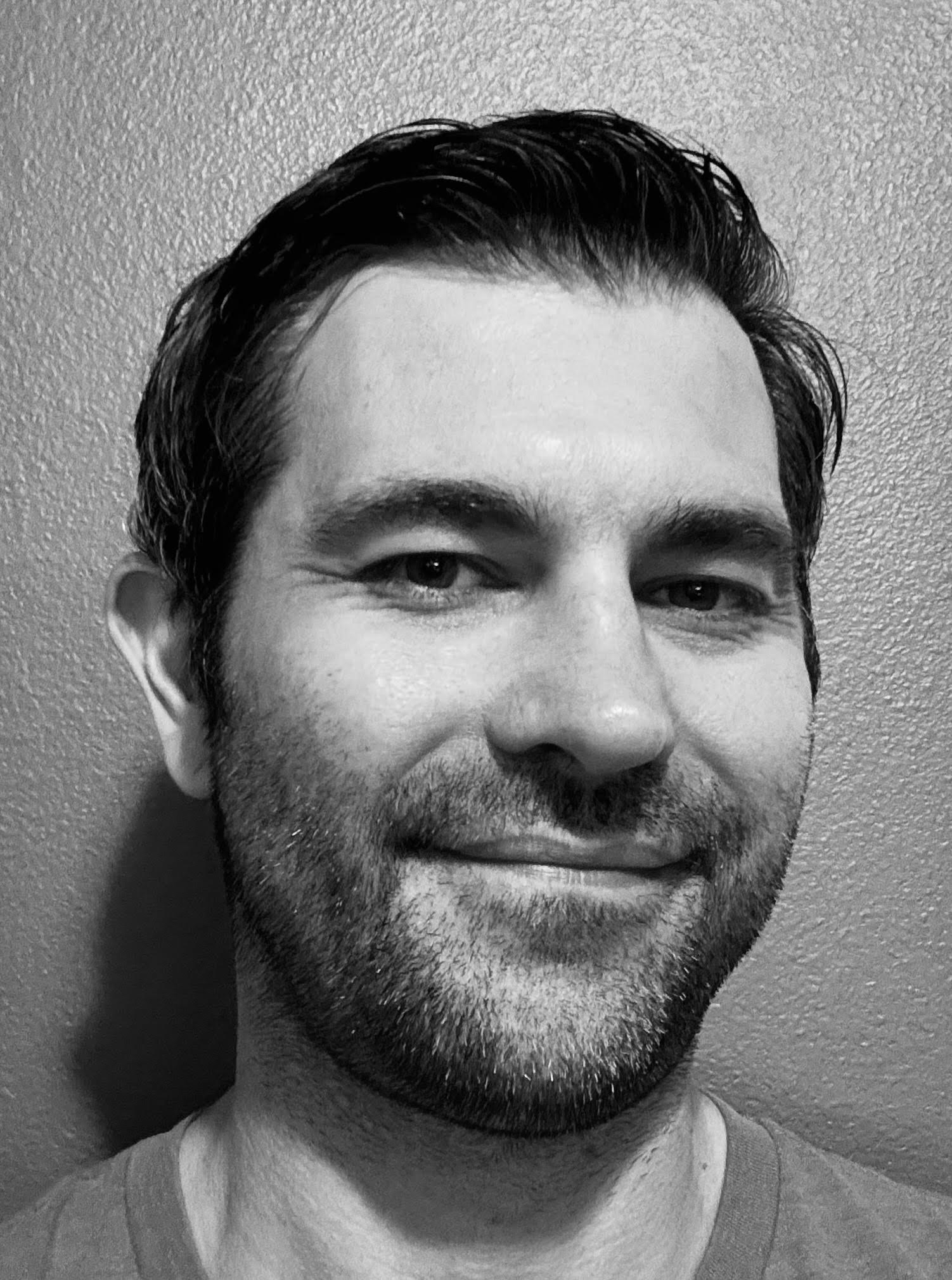
Daniel C. Rodgers is the author of Escape The Clock, the 2025 Best Retirement Book Winner and host of the Escape The Clock podcast.
“I wasn’t educated for this. I had no financial advantage. Quite the opposite, actually. I started with over $100k of debt and didn’t even know what a retirement account was. Yet, thanks to my career as a Program Manager, I learned the tools I needed to get organized and make that dream a reality.”
If you think this approach could work for you or you’re curious about other options, feel free to schedule a time to connect with me at www.escapetheclock.com. I’d be glad to help you explore the best path for your unique situation.