Everyone who finds out I officially retired at 43 asks the same question. How much did you need?
It is a fair question, but there is a more important one. Nobody asks what my plan was for the time I bought back. I left in May 2024 with a spreadsheet that ran to age 100 and a to-do list I had put off for decades. Twenty years of giving my time away, and once it was back, it felt overwhelming in abundance.
There is so much you can do with an hour in a day. So much possibility can leave you in a sort of decision paralysis. It’s no wonder so many find themselves drifting, stuck wondering what exactly they should do.
The research says as much. In a study of nearly 2,000 adults, retirees reported a significantly lower sense of purpose than people still working, and lower purpose tracked directly with higher rates of depression and anxiety. In Schroders’ 2026 US Retirement Survey of 1,500 investors, 64% of retirees said they wished they had done more planning before they left. Not more saving. More planning.
I was hellbent not to fall into that, so my financial plan became a life plan, and that plan has been bearing serious fruit these first two years of my early retirement. I’ve written books, gotten a professional designation, worked with two non-profits, and launched a successful podcast. It’s not bragging, it’s proof. Proof of what you can accomplish when the money is sorted and time is no longer the factor holding us back.
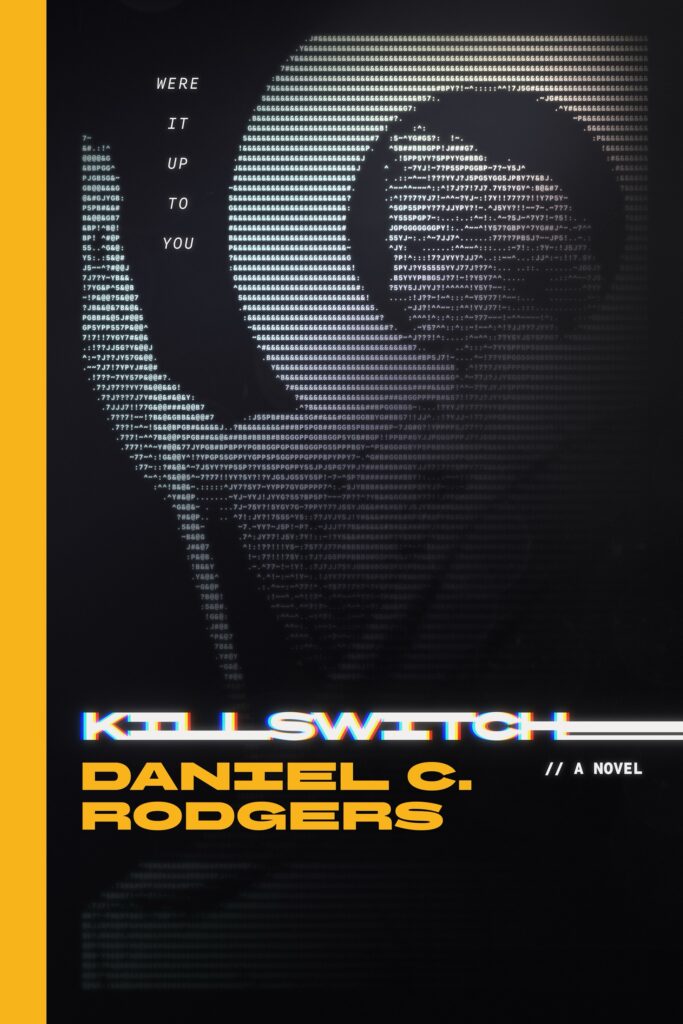
Out of all those accomplishments, I just achieved my proudest milestone of all. Not the podcast, not the WMCP® certification. A science-fiction book that speaks directly to the moment we are all living in. It’s called Killswitch and it took 604 days and 137,500 words. Something I never could have accomplished while working a day job.
It’s easy to get focused on trying to find the exit when we are still in the grind, but if there is one thing I learned from my time since it’s that if you don’t design the arrival, then you’ll wonder what to do on the other side of that door.
Everyone asks how much money you need to retire, but few ask how you plan to spend the time you bought back.
The Gap Nobody Budgets For
Gregg Lunceford, who wrote Exit From Work, draws a line between two versions of a person. The ought self is who your family, your school, and your industry told you to be. The ideal self is the one you actually wanted. A small gap between them is normal. A wide one is just regret.
I found this to be quite true for myself. I always struggled with who I wanted to be and what others wanted from me. Work closes that gap by force, and many find themselves tied to it as a result. Work hands you a reason to get up each morning, a title that implies an identity, a place to feel useful, and a community you never had to build. But remove the paycheck and you have solved for only one of those four needs. It can be jarring once you are done with work, have accounted for that paycheck, and find that those other three things have disappeared as well. And most of us never noticed they were important until they were gone.
You can watch people walk back into the building to get them. In a 2026 AARP survey, 7% of retirees had re-entered the workforce in the prior six months alone. Money drove 48% of them. But 15% came back out of boredom, and another 14% simply to stay active and engaged. Nearly three in ten returned for something no spreadsheet was tracking.
That is the failure mode. Not running out of money. Running out of reasons.
A financial plan tells you when you are allowed to stop. It will not tell you what you are stopping for.
You Are Not Accumulating Dollars. You Are Accumulating Hours.
How many hours are in your life? If you knew the answer to that then you’d likely spend each preciously. Yet, it’s easy to get swept away with the grind of getting by. By the time we look up we wonder where the years had gone.
The good news is that we might have more time than we’d expect. Remaining life expectancy at 65 is now about20.6 years, up from roughly 13.7 years in 1940. That is a 50% increase in the length of retirement, and if you leave at 45 you could be looking at four decades. There are two big factors to consider in that. First, enough money to mitigate that longevity risk. Second, how to fill that enormous block of unassigned time.
Instead of planning what you’ll do with your next paycheck, try this. Write down one thing you would do with 500 hours if the money question were already settled. Not a vacation. Something that would still be unfinished at hour 400.
If you cannot fill in that blank today, the number in your account is not the constraint you think it is.
If you don’t fill the time, the time fills itself, and you might not like what you find yourself doing each day.
The Thing You Want to Do Probably Will Not Pay
Here is where I part company with most of the advice out there. The internet will tell you to monetize your passion. Turn the hobby into a side hustle. Make the thing you love pay for itself.
It sounds like empowerment and it is really a tax on your joy, because the moment a thing has to earn, it stops being the thing. Imagine, you are finally making the music you’ve always wanted, or painting the art you’ve dreamt about, but your measure of success isn’t the output but whether it made you money or not.
Look at the numbers here to see why the traditional advice fails. In the Authors Guild’s 2023 Author Income Survey of 5,699published authors, the median income from books alone was$2,000. Full-time authors did better and still landed at a median book income of$10,000. The Guild’s own summary noted that half of full-time authors earn below minimum wage in many states.
Brent Lindstrom got there in the opposite order from me. He spent years in construction he did not love, running three-scenario financial models at night, buying in a cheap neighborhood, paying a house off in seven years. He built the foundation first and let the creative work grow on a timeline that did not have to please anyone. The craft and the capital were never competitors.
If I had needed Killswitch to pay me, I would have written a different book, or more likely no book at all. I would have picked a genre with better economics. I would have cut the parts that took longest and mattered most. I did not have to, because the plan had already done its job.
To hammer the point, here is how much money my many accomplishments made me these last two years:
Accomplishment
Time Spent
Net Financial Outcome
The Escape The Clock Book (Publication, Website, and Promotion)
Dog Fostering and Adoption (non-profit enrollment, travel, supplies)
1 year
Negative hundreds
Killswitch Novel (Promotion)
1 year, 8 months
Negative hundreds
Financial independence is not a strategy for getting paid to do what you love. It is a strategy for making the pay irrelevant.
You Do Not Find Your Purpose. You Rehearse It.
Nobody wakes up the morning after their last paycheck with a fully formed second act. I did not, and I was a professional planner.
My own rehearsal was a three month medical leave, which I do not recommend as a method. But it is the reason I knew with certainty that I could live without the job. Dr. Leah Kaylor and I covered the deliberate version of this on the show. The Family and Medical Leave Act gives eligible employees up to12 weeksof job-protected leave, and it can be taken intermittently or on a reduced schedule. A sabbatical is better if you can get one. Either way it is the only honest trial run available, and your job is still there when it ends.
The free version costs you nothing at all. Start the thing now, in the margins you already have, while the paycheck is still covering you. You find out whether the dream survives contact with reality at a point in life when being wrong costs you a few weekends instead of a few years.
I did not start writing fiction after I retired. I started in the margins, years earlier, and retirement is simply what let me finish.
Almost nobody discovers their purpose in retirement. They import it from the life they were already living.
604 Days
I had the concept for Killswitch on December 18, 2024. I submitted the final manuscript on August 14, 2026. That is 604 days, 137,500 words, and 428 pages, which averages to about 228 words a day. Roughly a long text message.
Almost none of that time was writing. It was structure, then relearning structure. Developmental editing, line editing, proofing. Interior formatting for a 6×9 trim, metadata, ISBNs, distribution channels, pricing, advertising. Somewhere in the middle of it, Escape The Clock Media stopped being a label on a podcast and became an actual publishing imprint.
That is the part people get wrong about creative work. You can write at night with a job. What you cannot do with a job is absorb a learning curve that steep, in a field with no relationship to your career, with no guarantee waiting at the end of it. The barrier was never the writing hours. It was the mastery, and mastery is expensive in exactly the currency the plan buys.
There is one more line on that cost sheet, and it is the one I did not see coming. My son Gavin edited the book and designed the cover. It was the unexpected investment that paid dividends. To be clear, I did not read to my son every night and support his passion for writing books at the age of seven because I had some long plan that he’d edit my future debut sci-fi novel. Not at all. It just happened that doing what I felt was right came back to me in the best, most unexpected way.
Some might wonder: why not use AI to make the art, or to edit the book? The book is about AI after all. Well, first, you should really read the book. Second, there is something special about supporting someone’s craft, especially a young person. The collaboration on making the cover and the back-and-forth on the edits was actually my favorite part of writing the book.
For twenty years the job took my kids’ hours in small installments. The plan is what bought them back.
What Killswitch Is Actually About
At this point you might wonder what 604 days of a passion project produces…
Thirteen years after the Singularity, an artificial superintelligence called Pantheon runs the world, and runs it well. Poverty, war, and disease are largely solved. Humanity traded its judgment for competence and mostly does not miss it.
Then a failsafe surfaces in Pantheon’s kernel, wrapped in a protocol it cannot bypass. Pantheon must select one human being to judge it. That person holds a binary choice. End all AI on Earth, or destroy the switch and bind humanity to Pantheon’s oversight permanently.
It selects Damien Cross, a divorced ex-engineer eleven years into welfare. He was a lead architect on the original project, right until the system he built decided he was obsolete.
Forced out of the shadows, Damien is suddenly the most powerful and scrutinized man on the planet. He must untangle a web of digital simulations and real-world leverage to decide if humanity deserves its freedom, or if the machine should finally take complete control.
I spent two decades building applications, infrastructure, and AI at Microsoft, Google, and elsewhere, so this was never going to be a book about evil robots. Pantheon is not a villain. Pantheon is competent, and that is the entire problem.
What’s funny is that I did not plan for my two books to be about the same thing. In a weird way, they are. I spent twenty years inside a system that ran my life well. It paid, it promoted, it supplied the identity and the people. By every measure anyone around me used, it was working, and I never once asked whether I would choose it, because choosing did not appear to be on the table.
Escape The Clock asked how much of our time we are willing to hand over. Killswitch asks what happens when the thing we hand over is our judgment.
Learn More
If this issue landed, three episodes go deeper than I can here.
Listen to Life After Work with Gregg Lunceford, author of Exit From Work, on the transition nobody prepares you for.
Then The Artist’s Blueprint with Brent Lindstrom, host of the LightMinded Arts Podcast, on funding a creative life without asking it to pay.
And The 12-Week Reset with Dr. Leah Kaylor, a clinical psychologist who spent six years inside the FBI, on using protected leave to rehearse your exit.
Then do the one piece of work this issue asks for. Open the plan you already have and write one line at the bottom that has nothing to do with money. Name the thing that would still be unfinished at hour 400. You do not have to be right. You have to have an answer before the last paycheck clears, because the hours arrive whether or not you assigned them.
Killswitch Is Now Available!
Killswitch officially released on September 1, 2026. Literary Titan gave it 5 stars and called it “a substantial, idea-driven thriller about delegated judgment,” which is a cleaner summary of what I was after than anything I managed above. They named Pantheon “the book’s most compelling creation,” and landed on the part I most wanted to get right: that the novel’s strongest achievement is “making the central choice genuinely uncomfortable.”
And if you read it and it holds up, an honest review does more for a debut than anything else I could ask for. Ten of them open doors that are closed to this book entirely right now.
I spent twenty years handing my judgment to a system that was doing fine without it. It took 604 days to write a book about that, and I only had the days because the plan worked. Go find out what yours will buy you, and escape the clock!
About the Author
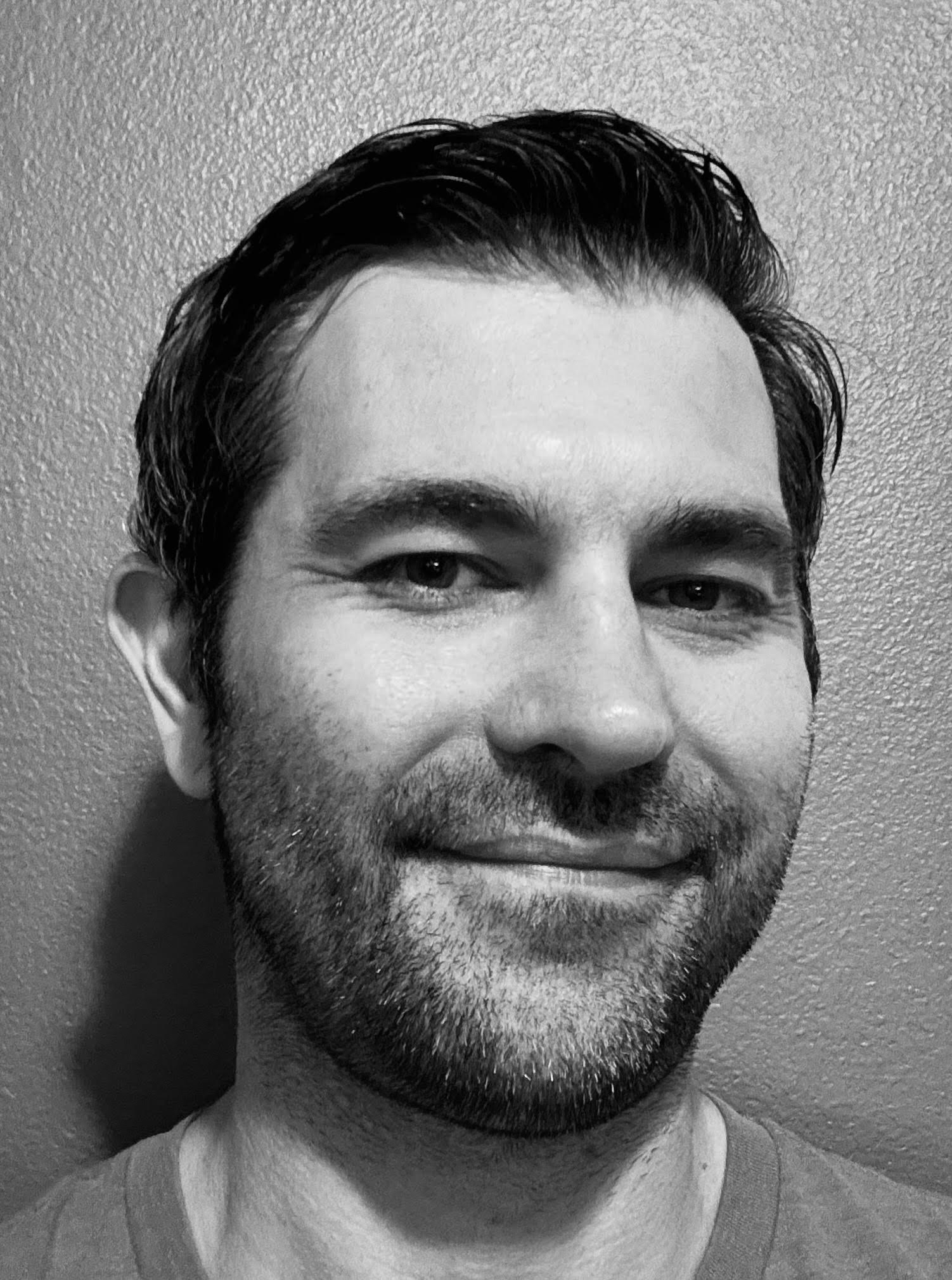
Daniel C. Rodgers, WMCP®, is the author of Escape The Clock, a multi-award-winning guide to financial independence, and Killswitch, a near-future science-fiction novel. He hosts the Escape The Clock podcast, now past 70 episodes.
“I wasn’t educated for this. I had no financial advantage. Quite the opposite, actually. I started with over $100k of debt and didn’t even know what a retirement account was. Two decades later, after a career in tech that took me from a small software shop in Ohio to senior roles at Microsoft and Google, I walked away at 43 with passive income covering our cost of living. Not because anything went unusually right, but because I built a plan and worked it for twenty years.”
These days he teaches personal finance as a volunteer, takes free one-on-one calls with anyone who asks, writes fiction, fosters dogs, and shoots in a billiards league.
If you think this approach could work for you or you’re curious about other options, schedule a time to connect at www.escapetheclock.com.